

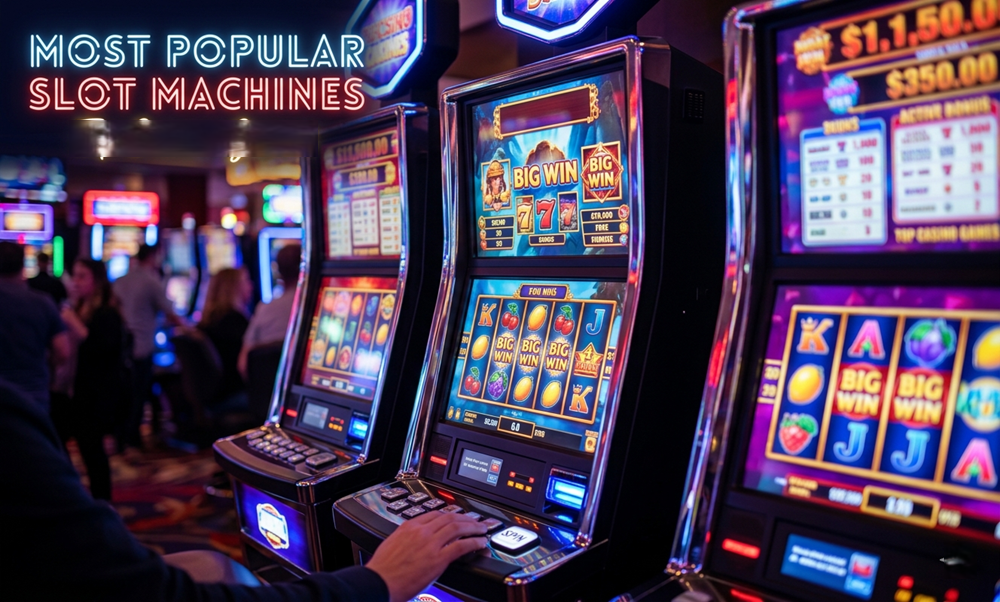
Walk into any major casino — physical or online — and certain slot machines always seem to have someone at them. Some have maintained popularity for decades. Others exploded onto the scene and became permanent fixtures almost overnight. Understanding why certain slots dominate isn’t just interesting — it reveals how game design, math, and psychology work together.
Here’s an in-depth look at what makes slot machines consistently popular, with real examples from the industry.
What Makes a Slot Machine Popular?
Popularity in slots isn’t random. Research in gaming psychology and player behavior consistently identifies several factors:
1. Recognizable Themes and Brands
Licensed slots built around established entertainment properties draw immediate attention. A player who already loves a film franchise, TV show, or musical artist is primed to engage with a slot version of it.
However, popularity doesn’t guarantee high RTP — licensed games often have slightly lower RTPs because a portion of revenue goes to licensing fees.
2. Accessible Mechanics
The most enduring slot machines have mechanics that are immediately understandable — you don’t need a tutorial to grasp how winning works. Complex bonus structures attract some players, but broad appeal requires fast comprehension.
3. Near-Miss Engineering
Regulatory bodies in many jurisdictions have restrictions on deliberate near-miss programming, but the phenomenon still shapes player perception. Seeing two jackpot symbols with the third just above or below the payline creates a sense of near-success that drives continued play — even though each spin is independent.
4. Bonus Round Anticipation
Games that feature exciting, multi-stage bonus rounds create “event anticipation” — players continue spinning partly for the chance to trigger the feature, not just to win on the base game. This emotional engagement increases session length.
5. Sensory Design
Sound design plays a documented role in slot popularity. Winning sounds, near-miss sounds, and ambient audio are engineered to maintain engagement. Research on slot audio design has been conducted by several gaming psychology academics, including Natasha Dow Schüll (author of Addiction by Design).
Long-Running Popular Slots by Category
Land-Based Classics
Wheel of Fortune (IGT) One of the longest-running popular slot brands in the United States, launched in 1996. Its popularity is attributed to the recognizable TV show brand, the community bonus wheel (a physical spinning wheel), and consistent placement on high-traffic casino floors.
Buffalo (Aristocrat) Particularly dominant in North American casinos. The Buffalo series uses a 1024-ways-to-win format with stacked symbols. It has spawned numerous sequels (Buffalo Gold, Buffalo Grand) due to sustained player demand.
Double Diamond / Triple Diamond (IGT) Classic three-reel mechanical-style games that remain popular with older casino demographics for their straightforward, familiar mechanics.
Online Slot Phenomena
Starburst (NetEnt) One of the most-played online slots globally. Released in 2012, its simplicity — a 10-payline slot with expanding wilds that pay both ways — made it a universal welcome bonus game. Its low volatility and accessibility drove widespread adoption.
Book of Dead (Play’n GO) Highly popular in European markets, particularly the UK and Germany. A high-volatility slot with an expanding symbol mechanic in the free spins round. Its popularity led to a genre of “Book of” themed games from competing developers.
Gonzo’s Quest (NetEnt) Credited with introducing cascading reels (called “Avalanche” by NetEnt) to mainstream slot players. Its narrative framing and multiplier chain mechanic influenced a generation of subsequent game designs.
Popularity vs. Value: An Important Distinction
| Factor | Popular Slot | High-Value Slot |
|---|---|---|
| RTP | Not necessarily high | 96%+ |
| Volatility | Often medium (broadest appeal) | Varies by player preference |
| Feature Depth | Usually good | Not always correlated |
| Marketing/Exposure | High | Irrelevant to RTP |
A popular slot is not always the best value slot. Some of the most played machines maintain popularity through marketing, placement, and brand recognition — not through player-favorable mathematics.
Pro Tips: Using Popularity as a Research Starting Point
- Popular slots are widely reviewed — extensive player community data on forums like Slot Tracker or community threads can reveal real-world performance patterns
- Popular games are more likely to have demo versions — try them without wagering real money first
- Popularity drives developer sequels — if a mechanic in a popular game appeals to you, look for the sequel or similar mechanics from the same developer
- Licensed popular games often have slightly lower RTP — factor this in when choosing between a branded slot and an unbranded equivalent
Common Misconceptions About Popular Slots
- “Popular means it pays more” — popularity and payout rate are unrelated. A slot can be popular for its theme, sounds, or placement and still have a below-average RTP
- “A crowded machine is hot” — slot machines use certified RNGs; occupancy has no bearing on results
- “New = better” — some of the most technically sound slots are years old; newer games aren’t automatically better designed
FAQs
Q: Why are some slot machines more popular than others? A combination of brand recognition, accessible mechanics, engaging bonus features, sound design, and casino floor placement drives popularity — often independent of RTP or odds quality.
Q: Is Buffalo slot the most popular in the US? The Buffalo series by Aristocrat is one of the most widely cited in terms of casino floor space and player hours in North America, according to industry floor reports.
Q: Do popular online slots have better odds? Not necessarily. Popularity correlates with engagement mechanics and marketing. RTP is set independently by the developer and unrelated to the game’s popularity ranking.
Q: Why do casinos feature certain slots prominently? Placement decisions involve a mix of performance data (revenue per square foot), licensing arrangements with developers, and promotional deals. High-traffic placement often goes to games that maximize casino revenue, not player returns.
Conclusion
The most popular slot machines earn their status through a combination of recognizable themes, accessible mechanics, memorable features, and deliberate sensory design — not necessarily through the best odds or highest RTP. Understanding why these games are popular gives you a clearer perspective when choosing what to play: look past the popularity and always check the RTP, volatility, and paytable. What’s popular on the casino floor isn’t always what’s best for your bankroll.
